
The wonders of organic grass-fed beef - by David Warren, owner of Boomplaats Organic Farm, Free State, South Africa
-
in Blogs
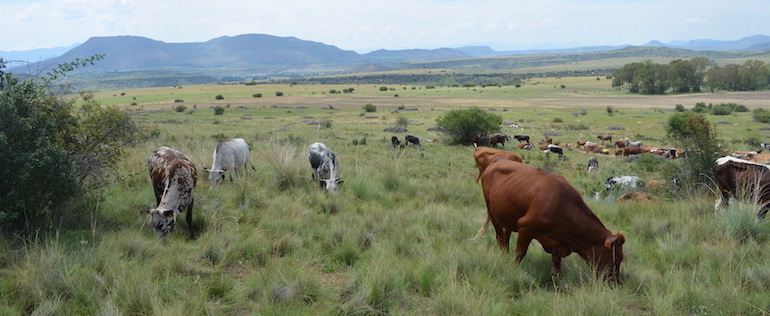
How many times have you heard that meat is bad for you - that it causes cancer, heart disease and other nasty illnesses? Red meat has consistently been given a bad reputation and we have been encouraged to drastically reduce or eliminate our meat intake, or else we will suffer the consequences of early onset disease. But, in actual fact, not only is meat a natural human food (think back to our hunter-gatherer ancestors), it’s also a rich source of life-giving nutrients, providing it’s properly produced.
The way in which meat is ‘manufactured’ today causes it to become an instigator of chronic disease and ill-health. Cattle are not designed to eat grains. Their natural foods are grasses and native legumes. Eating grains makes them sick. In addition, farms that supply cattle feedlots make heavy use of herbicides, fungicides, pesticides and chemicals on their soils and crops. On arrival at a feedlot farm, the recently weaned calves (8–12 months) are dipped, given growth hormones and routine antibiotics, and forced to spend the rest of their short lives (6–8 months) in confined spaces while standing in their own dung – a recipe for sickness and disease. Basically, feedlot cattle are unhealthy and loaded with toxins. Consuming their meat ensures a higher risk of chronic diseases like cancer, Alzheimer’s and heart disease.
The grains eaten by feedlot cattle cause commercial meat to be disproportionally high in omega 6, the fatty acid which if out of balance with omega 3’s, can cause chronic inflammation. The leafy grasses and natural legumes that our free-range grass-fed animals eat, results in meat that is rich in omega 3 fatty acids: a higher omega 3 to omega 6 ratio reduces the risk of heart disease. Our meat is also high in CLA (conjugated linoleic acid), which promotes metabolic health, the antioxidant beta-carotene (which is converted to Vitamin A), and Vitamin E.
Enter organic certified grass-fed, free-range animals. At our organic farm, Boomplaats (in the Free State, South Africa), our indigenous animals are left to graze all day long in natural pastures, eating grasses and legumes best suited to their biological constitution. They get plenty of sunshine, fresh air and spring water and are free from anxiety and stress. The meat produced from our cattle is how meat is meant to be if it is to benefit and not hinder human well-being. We don’t use any herbicides, fungicides, pesticides or chemicals on our farm, nor are our animals vaccinated or dipped. The only additives we provide our cattle with are natural rock salt; organic certified rock phosphate and organic certified kelp from the cold Atlantic Ocean. Kelp (seaweed) provides the cattle with all the micro-nutrients they need, plus it enhances the taste of their meat.
Free-range, free-roaming, cage-free, pasture-raised, are some of many marketing key words thrown around these days to catch the eye of the consumer. But what do they mean? The definition of free range is: livestock kept in natural conditions, with freedom of movement. There has been a lot of debate around this topic, especially in the poultry and pork industry. There are a number of minimum requirements set out to meet the free range label, and one of these is that they have access to the outdoors. However, this access could be as little as five minutes per day and it will still qualify as free range. Or the outdoor access could lead to barren ground - is this truly free range? The animal needs to be allowed into its natural environment to forage and feed on its natural diet, moving around and absorbing the sun’s rays, not being confined to a cage or cell while being force-fed herbicide and pesticide-laden GMO grain.
Always verify everything when you are faced with a choice to purchase free-range meat. I would suggest taking the time to meet the farmer who you intend purchasing your food from. Visit the farm and observe the animals; spend some time interacting with the farmer and staff and asking questions. Get a better understanding of what you and your family are consuming. Is it what nature intended? Is it adding value? Is it doing good to your body or damaging it? Or will you have to rely on a pharmaceutical ‘fix’ later on?
On the other hand, organic meat production is a cycle of optimal health that starts in the soil and ends up on your plate and in your body. As health conscious shoppers, check your meat packaging: if it doesn’t say free-range, it’s feedlot; if it doesn’t say grass-fed, it’s feedlot; if it’s not certified, it’s not organic. By choosing organically produced meat over feedlot products, you are not only boosting your own longevity, you are also supporting the humane treatment of farm animals and the production of sustainable healthy food. It’s now up to you, the consumer, to carry this torch to the next level and make a difference by supporting your local organic farmers.
If you would like more information about David’s beautiful farm and his healthy animals, please visit www.boomplaats.co.za