
Crunchy Kale
-
in Blogs
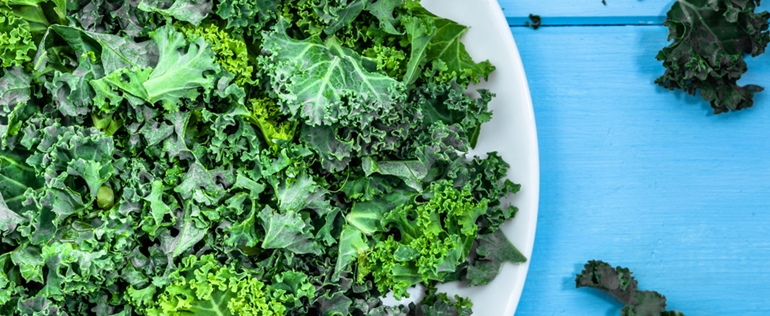
We all roughly know how much kale or spinach we need to pick or buy to feed a family of four. It’s a lot, right? Even simply as a side dish, it’s a heap load. Well, how do we make the washing of this superfood super easy?
If you wash each individual leaf, it’s going to take you quite some time, so here’s a quick secret to share: fill a clean sink with cold water and add a few drops of Lugol’s iodine if you are not buying organic. As an aside, you really should be buying organic because these leaves are available all year around, so no excuses now... Tear the leaves off the stalky stems and add them to the water. Jostle the leaves vigorously so you can dislodge any soil or grit. Allow the leaves to stand in still water for around five minutes. This will allow all the grit to sink to the bottom of the basin. Take the leaves out, place them in a salad spinner, and spin dry. Then place them on a clean tea towel if they are not completely dry. You could do this with all your leafy greens for the week to speed up the preparation process. If you are not using them right away, allow them to dry completely. Wrap them in clean paper towel, place them inside of a clean plastic bag and place them back into the fridge. They should last around a week still looking fairly vibrant.
Why should we eat kale?
Just one cup of kale is superbly rich in vitamin K, which is so important for blood clotting and preventing excessive bleeding. You therefore want this vitamin flowing in your system because you really don’t know when you will end up hurting yourself, even if it’s a small cut from chopping it!
There are 6 main health benefits of kale:
1. Anti-inflammatory
It almost has a 1:1 ratio of omega-3s to omega-6s but leans slightly more to the omega-3 fats, making it an anti-inflammatory food.
2. Antioxidant
The dark green colour epitomises an increased concentration of nutrients, which suggests that it is full of antioxidants. It is also rich in vitamin C and beta-carotene.
3. Detoxification
Consuming kale helps to remove toxins from the body and helps the body eliminate them. It has isothiocyanates (ITCs) made from glucosinolates, a large group of sulphur-containing compounds. These have been reported to create a detoxification process from a cellular level. So the toxins are first eliminated by the antioxidants and then detoxified with the glucosinolates. However, if kale undergoes any form of radiation or sterilisation treatment, it weakens the availability of ITCs. For this reason, it’s incredibly important to purchase your kale from a reputable source.
4. Brain development in infants
Kale is a rich source of folate. The body will always recognise a real food mineral over a synthetic product. Therefore, a pregnant woman eating kale regularly may promote a healthy birth weight, prevent birth defects and promote proper development of the face and heart.
5. Cancer prevention
The glucosinolates present in kale are broken down during chewing and digestion into biologically available compounds that may prevent cancer growth.
6. Healthy vision
The two nutrients that give kale its dark colour are lutein and zeaxanthin. These two compounds have been shown to prevent macular degeneration and cataracts. Together they act as antioxidants in the eye and help to protect and maintain healthy cells.
I’ve included two super easy, exceptionally tasty side dishes using kale or spinach. I haven’t given exact quantities so use your intuition…
One of our absolute favourite side dishes is sautéed spinach/collard with feta cheese. It’s super simple and superbly nutritious. Add a good dollop of coconut oil or ghee to a frying pan. Allow it to melt, then add the spinach leaves. Sauté until they wilt and in the last minute, sprinkle a good handful of organic feta. Allow it to melt and serve immediately.
For a Thai infusion, try this simple recipe side dish: Melt a good dollop of coconut oil in a pan, add an onion, a good knob of fresh ginger and few chopped spring onions. Lightly fry these until the onions are translucent. Just before they are ready, add a few minced garlic cloves and a good pinch of Himalayan salt. Add a handful of shredded kale and fry for a few minutes and then add another big handful of shredded spinach or collard leaves (kale takes longer to cook so it must be placed in the pan first before the spinach). Pour a cup of clean coconut milk (the tin should just say coconut and water - The Good Life brand offers this) over the greens and fry for a further few minutes. Once nicely cooked, place in a bowl and add another glug of coconut milk, a good squeeze of lemon juice and some almond slivers to sprinkle over the top.